Blizzard of 1977: The White Wall

PART II

“What the…what are you doing?”

Me and my friends track snow through the front door, up the stairs to the second floor. “We’re playing.”

“Why are you in the house? You’re making a mess!” My mother closes the door against the snow that drifts into the living room, knuckles on hips, lip pursed. “And you’re letting the heat out!”

I stop in my tracks. I know that tone. It’s the “Turn off the lights, do you work for the electric company?” “Eat your dinner, kids somewhere are starving.” “If you’re friends jumped off a roof, would you?” voice.

Those friends (who I’d naturally follow off a bridge) run into my bedroom on the second floor, throw open the window that overlooks the porch roof, and climb out.

“Mo-om… we have to jump from up here. The snow’s too high.”

“You’re jumping from…upstairs!?”

“The roof.”

“The roof?”

You’re a kid and you don’t have to go anywhere or work a shovel -except to build snow forts and uncover your sled. So, you wrap up in as many layers as your mother can load on you, and you go outside and play, comfortable in the fact that you’re allowed to come right back inside when your fingers and toes turn blue and your runny nose freezes in your scarf. When you’re a kid, a blizzard is a trip through a Narnian wardrobe. It’s not a lethal weather distaster.

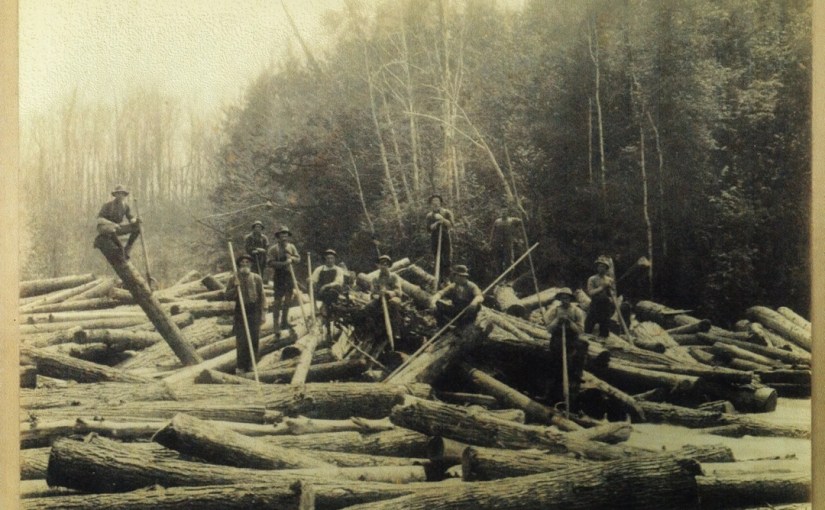
The blizzard of 1977 was a catastrophic weather event for western, New York. Twenty-eight people died from exposure, entrapment and vehicle incidents. Highways and airports shut down, stranding thousands, keeping commerce and emergency aid from moving anywhere. Homes were buried in forty-foot drifts, outages and blocked roads created shortages. There were significant livestock deaths and agricultural losses. Anything that needed to be delivered (especially milk from local dairy farmers) wasn’t. Power failed. Remote areas were cut off for days.

     Buffalo took the brunt of the storm, but the entire southern tier was burdened by the wall of white that spent three days dumping snow. The snowfall amounts had been (and has been) matched, but the combination of freezing temperatures and unpredictable winds were incomparable.

     Some thirteen-thousand people were stranded in Buffalo, ten-thousand cars abandoned. Snow mobiles became the only viable, reliable mode of transportation, but even these had to be limited when they ran into covered vehicles, then building tops, then power lines.

Staying inside and riding the storm out, without a plan, was dangerous as well. Houses were covered, with no way to vent noxious fumes that built up from heating systems, strangling utilities.

The city of Buffalo dominated the national narrative of the blizzard. Chautauqua and Cattaraugus Counties experienced the storm the same, on a miniature scale, smaller populations, with corresponding resources. Both counties rely heavily on a network of rural roads and state highways, most notably Route 60 and the New York State Thruway (I-90). Within hours of the storm’s onset, these arteries were clogged with abandoned vehicles. The storm warranted a complete ban on driving, but the independent and rural character of the population made many people try to commute. It quickly became impossible. Motorists, blinded by whiteout conditions, drove into ditches or simply stopped in the middle of a road, buried in drifts. Sheriff departments and local police had to recue people in vehicles that weren’t much more mobile than the stranded cars. They were overwhelmed. For days, the only functional vehicles were heavy military equipment and private snowmobiles, delivering medicine and food.

A federal state of emergency was declared -the first time ever for a snowstorm, and over five-hundred national guardsmen were deployed to Buffalo and surrounding towns. The Blizzard of 1977 set the standard for snow-related catastrophic emergency response protocol throughout the United States, specifically the severity and seriousness of bans on driving in affected areas.

My dad eventually brought a ladder to the yard, and we climbed to the porch roof from outside. We were kids with a week off school, jumping in piles of snow. We didn’t know we were in the middle of the Blizzard of 1977.

The BLIZZARD Of 1977

A winter like the old days.

Lake Erie froze solid December 16th, 1976. That’s early. It happens, earlier some years, but the lake almost always thaws after that at some point. We use Lake Erie’s surface status as a snowfall predictor. A solid Lake Erie usually means a milder winter; annual nor-eastern winds skim over the ice instead of pulling moisture and turning it into pregnant snow bands. A liquid Erie generates familiar snow bands and squalls, winters that turn a hundred inches of snow into two hundred.

In 1976 the lake froze and stayed that way, the traditional harbinger of relatively mild snowfall for counties bordering the great lake. The difference in ‘76 was an unusually heavy snowfall over the lake. Precipitation that would normally melt, accumulated on the lake’s surface, deep, wispy, light snow.

January of 1977 was the coldest month on record in Western New York to that date, averaging 13.8 °F. There was no melt, anywhere, and snowfall throughout the month, though not overwhelming, was steady. Bufalo had fifty-nine inches by the middle of January. There is no reported total snowfall for Jamestown, Dunkirk or Olean prior to the storm, but all three cities had over a hundred forty inches after the blizzard hit.

And the snow on Lake Erie was piled high…too high.

Thursday, January 27th. An arctic front builds a wall of snow that passes through Indianapolis, then Columbus, Toledo and Cleveland, Ohio. By evening the wall arrives in Erie, Pennsylvania (Erie will report more than five hundred vehicles accidents that morning). Winds scoop up all that snow off Lake Erie and carry it east with the already-packed clouds. Thursday night winds hit forty-nine miles per hour, driving a once in a century blizzard toward Western, New York.

Friday, January 28th. Witnesses describe what looks like a grey mist moving toward the southeastern cities bordering Lake Erie. Lightning flashes inside the maelstrom.

The mist turns into a menacing wall of white as it closes on the southern tier of New York, a blanket is thrown over the world. Visibility is nonexistent inside the white hurricane. The mass of snow from Lake Erie is dropped randomly all over Chautauqua, Cattaraugus, Erie, and Wyoming counties. By 1:00 pm snow begins to cover cars, first bumper high, then up to the windows. By evening drifts fifteen feet high are scattered throughout the region. The wind whips and shapes the snow without discrimination. Mounds of snow are picked up and randomly dropped, then moved again. A road that is bare one minute is impassable the next, shocking travelers with the arbitrary intensity.

Friday evening, winds gust to almost seventy miles per hour. Wind chills drop to sixty degrees below zero.By midnight, Buffalo, New York is crippled, an estimated two thousand cars are stranded on Main Street and about eight thousand on streets throughout the city. The south towns are frozen solid, covered in drifts.

Saturday, January 29th. Visibility improves in the morning, and municipalities send their plows and emergency crews out to clean up and assess damage. Abandoned cars are a major impediment to the effort. In Buffalo, trucks and payloaders dump snow into the Niagara River. In the south towns of Chautauqua and Cattaraugus counties area roads have become wintry tunnels, and parking lots are filled with banks of snow removed from roads.

Sunday, January 30th.  The wind and snow subside, and the sun comes out briefly. Towns come alive. Major roads are cleared.

With the weather softening and single lanes on major roads clearing, people head out into the world, to run errands, to witness the marvels of the blizzard.

     But the wind isn’t done with New York. At 3:00 pm, the wind increases and blowing snow once again turns visibility to nil. Driving becomes treacherous. Vehicles are stranded anew and abandoned cars block roads that had just been freed. A peak gust of 58 mph is recorded at the Buffalo airport. That night the wind chill falls to minus forty degrees.

Monday, January 31st. Most roads are closed by overnight snow. Fire departments spend time checking houses snow-covered to their roofs to make sure nobody is freezing or suffocating.

The blizzard has blown itself out. The effects of its carnage are just being realized.

Woodscape Art…Brilliance Wrapped in Legacy

He looked at the natural world differently than me and you, most probably, with an artist’s eye. You could tell then -if you saw him cruising the lake shoreline attuned to driftwood, touching trees for texture, skimming wood scraps of fallen lumber for the right shape, the perfect color or grain- that he sought something we didn’t see.

You can tell now by the collection of bark, pebbles, and myriad species of flora stored at the house of his protégé, Greg Wefing.

Cecil Rhodes has been gone for some eleven years now, passed away in 2013. He was a schoolteacher at Maple Grove High School, classically trained in industrial design at the Pratt Institute of Brooklyn, and at teaching at Edinboro University of Pennsylvania. He was also a local legend and celebrated creator of what he called then, and Greg calls now, Woodscape art.

Woodscapes are crafted with different sizes and various species of wood sometimes enhanced with colored stains and paints. They are like three-dimensional paintings. Greg has a collection of his own work, and a few of Cecil’s pieces as well. A Woodscape of Wefing’s has hung the Bemus Village Hall for about thirty years.

Rhodes essentially invented the discipline of Woodscapes in the late 1970’s and early 80’s. He’d been employed in the garment district of New York City for eleven years, a teacher for five more at Maple Grove (his de facto alma mater, graduating from Bemus Point High School in 1950), and a boat repair specialist when he realized he had an aptitude for art, and that wood was his medium.

Cecil Rhodes

“Cecil created from his imagination, I think. He’d get an idea and be able to make a piece. I do mine from pictures I find, usually in calendars and magazines.” Wefing is standing in front of a pile of nature-art planners and mags on a workbench in his basement workshop. Lining the wall are shelves of wood strips and filings of various color and texture. “Something will kind of jump out at me, and I’ll have a new project.”

And then he goes to work, unearthing the raw material that will form his art. Greg is now the person you’ll find in the Bemus area combing the natural world for the right materials to fulfill a vision and build Woodscape art. “Yeah, I’m the guy you see cutting down tall grass or cattails on the side of the road. Or at the lake looking for driftwood, peeling bark off a tree,” he says.

The village of Bemus Point, when you drill down to the locals (that population that spends years in the same place, completing their routines, season after season) is character driven. Cecil Rhodes was semi-famous for his meticulous, detail-driven artwork. Wefing has followed a similar path, building a trove of bas relief art that’s impressive for its detailed craftsmanship and vision. “I worked for Cecil for two or three years while I went to art school,” he says. “Cecil worked mostly with wood tones. I started to add some color to mine. They’re a little different, but a lot of the same techniques, the same process.”

Wefing figures he could knock off a piece in a week if he put in the hours. But he does his art at his own pace. “I usually do about five a winter, down here in the studio, when the weather is bad. I’ve done commissioned work, but don’t really like it. I like to work at my own pace, on my own projects.” He says Cecil’s efforts to mainstream the art wasn’t as successful as his individual creations. “He was thinking we might mass produce some of his pieces, and I was going to be part of that. It never really worked out. His art was pretty special.”

Wefing isn’t really in it for the money (though he could be, his work is that good), but does sell his art, informally, and mostly from his Facebook home page.

CHAUTAUQUA BRIDGE

In October of 1982, 726 athletes lined up in Bemus Point with the goal of crossing the lake and back. The lake was much too cold for a swim. The Bemus Pint Ferry was not an option for a Fall 10K race. Fortunately, these runners had a fresh path, brand spanking new pavement, the Chautauqua County Veterans Memorial Bridge.

There was a time when getting from the southern part of Chautauqua Lake to the upper lake was a logistical chore, Mayville to Jamestown was a journey, more than a grocery run. Routes 394 and 430 wrapped the lake, picturesque to be sure, but cumbersome for anyone in a hurry. This was prior to 1982. A drive from Jamestown to Long Point State Park was a common trip, fifteen miles or so up the north side of the lake.

If you then wanted to tour the southwestern coast, Stowe, Chautauqua Institution, or points south, you had one of three options:

  1. Circumnavigate the lake, back through Jamestown, or north around Mayville.
  2. Drive into Bemus, hope to catch the ferry.
    1. The ferry had to be running that day.
    1. The ferry had to be on your side, ready to go to the other side.
    1. You had to be the one of the first ten or so cars in line.

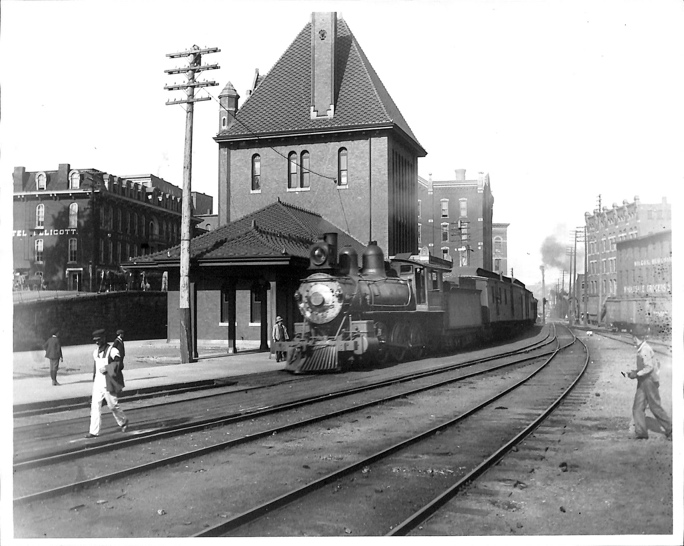
For an intrastate trip through New York, from the west to east you used the I-90 corridor along Lake Erie, all southern cities, Jamestown, Olean, Corning, and east, were accessible by backroads only. What is now Route I86 as a developed interstate highway wasn’t a priority because of that pesky lake blocking any straight run west to east.

That changed in 1982 with the building of the Chautauqua County Veterans Memorial Bridge.

That Fall 10K race in Bemus, launching the opening of the first non-stop vehicle option for getting from one side of the lake to the other, was forty-two years ago, a long time for a bridge. Now it’s in need of a facelift. Or in lieu of a cosmetic revival, some body work.

Enter New York State Department of Transportation and their checkbook.

The state has earmarked $78 million for renovations and structural work on the Chautauqua County Veteran’s Bridge. Another $4.7 million for the local success routes to the bridge off routes 430 and 394. Work began on the main part of the 3,790-foot main span last summer (2023). It’s expected to be completed fall of 2026.

New York State DOT Commissioner Marie Therese-Dominguez was in Chautauqua recently to oversee the start of the project. “It’s going to enhance safety, it’s going to ease travel and it going to extend the service life of these bridges by another 40 years,” she said.

The work being done probably won’t show itself to the casual observer -new bridge joints, fresh decks, bearings, and repaired steel. The roadway will be resurfaced. On and off ramps will have new barriers.

The noticeable part will be the closures and re-routing of traffic to get the job completed. The plan is to work one set of lanes at a time, and only close the entire bridge for short periods during nighttime. Local officials are of course asking people to be patient with the process and disruptions in traffic.

Commissioner Therese-Dominguez says, “It’s going to take a lot of patience but in the end, I think it’s going to be well worth it.”

Governor Hochul released a statement saying, “To ensure that our communities and our economy in all regions of the state continue to grow and prosper, New York state is making investments to strengthen and harden our infrastructure to meet and exceed the challenges of the 21st Century.”

State Sen. George Borrello, R-Irving, thanked Hochul for recognizing the importance of the bridge and the need to bolster the structure. “She is no stranger to Chautauqua County, no stranger to Chautauqua Lake and she knows the importance of it,” he said. “I want to truly thank her for investing in infrastructure around Chautauqua County, particular, this major, major investment in this bridge over Chautauqua Lake.”

Mason Winfield’s

SPIRIT WAY PROJECT

© MASON WINFIELD 2023 SPIRIT WAY PROJECT 2023:

The paranormal expert/examiner/medium/TV personality steps boldly into the house/barn/cellar/church, the one that locals say is haunted, the site that bumps in the night. An audio-visual crew follows diligently. They pack equipment designed to detect the undetectable, to record the mysteries within; a ghostly apparition, a supernatural aura, a sixth sense.

And…CUT

PRINT

Mason Winfield has a deep and abiding interest in the paranormal. It’s been his life work (as evidenced by his vitae on his website http://www.masonwinfield.com). He’s a lecturer, author, storyteller, scientist. He is not, by his own reconning, a “ghost-hunter.” If there’s a profession that informs and directs his attention and talents, it’s probably best described as “Truth Seeker”.     

He believes it’s time for the industry to innovate, to broaden its influence. “If there’s a possible way to the truth, you have to take it, don’t you?” he says.

To accomplish this, Winfield seeks to employ a field of multidisciplinary professionals, people different in cultural and thematic sensibilities, to explore ancient spaces, areas of the northeastern United States that have universally experienced what he calls “EHE”, Exceptional Human Experiences. “Why do people say they see the thigs in the paces they do?” Winfield asks.    

It’s a query he hopes to answer with The Spirit Way Project.

Designed like the popular European group The Dragon Project, The Spirit Way uses the resources of scientific and paranormal disciplines to research the undeniably interesting and real world of EHE.

Winfield says, “The reality-TV paranormal industry typically studies buildings no more than a century-old–as though haunted sites are sensational and rare, no more original ones can be found, and paranormal sightings occur only indoors. It also barrages us with two perspectives, either intuitive–psychic–insights or surveillance ghost-hunting, as though using electronic and digital instruments as a glorified Ouija board is some objective avenue to the truth–and no other avenues of insight are available.”

Differentiating from the television shows you night have seen, The Spirit Way is basically a two-fold approach to supernatural investigation; using ancient resources to identify sites of EHE that have survived and inspired humans for centuries (think Native American history and collective consciousness), and to coordinate with any and every discipline to develop a coherent and multi-faceted theory of those experiences. So far, the group has employed:

A Feng-Shui Master, an Algonquin Elder, an African-American psychic medium, an author/researcher/paranormalist, a psychologist, two master dowsers, local scholars, historians, anthropologists, geologists, First Nations leaders, aerial surveillance experts, and team of paranormal investigators.

The goal of the team is to examine sites of reported Exceptional Human Experiences through the disciplines of geometry, shape (symbolic form), geology (earth-energies), archaeo-astronomy (an awareness of sunrises, moonrises, equinoxes, and solstices), and alignments across broad stretches of landscape to suggest codes if not messages.

“It’s been a challenge. There are no upstate surveys of supernatural events; national, but not local. All anyone can agree on is that these monuments had sacred function–and that, like Stonehenge and the Great Pyramid and a worldwide league of others, they are paranormal sites. In their proximity, people report exceptional experiences. Just like a haunted house–though vastly grander and more profound–these ancient American sacred sites get a lot of ghost stories.”

Winfield lives in East Aurora, and understands the newer supernatural phenomenon in Western, New York. Along with his partner, and co-founder of The Spirit Way project, Algonquin Elder Michael Bastine, who Winfield calls one of the best teachers in the world on the subject of native supernatural history, the goal is to broaden the scope of their studies to the ancient world.

“The ancient monuments of the British Isles have been preserved and studied,” Winfield says,” We want to start a new model of north American haunted sites, ancient places, not buildings, hut rather the outdoor sites, real study from different perspectives.”

The Spirit Way will start with a program of fifteen YouTube episodes in New York State.

Winfield concludes, “There is more to the paranormal. The Spirit Way Project (SWP) believes it’s time for a revolution. We think the public thirsts it.”

Home of Lucy Hosts The Babe!

The little league baseball field at Celoron Park sits by the Chadakoin River that drains Chautauqua Lake on its southern end. Hit a baseball far enough into right field there and it could theoretically, eventually, spit out in the Gulf of Mexico some eleven-hundred miles downstream. The field is built for little league players, shortened base paths and pitcher’s mound. It’s also, as legend has it, where Babe Ruth once stood and hit a baseball into the Chadakoin River, some five hundred feet from home plate.

Except that isn’t exactly the place. The Babe belted the celebrated ball, but not quite where kids hit baseballs today. And he only did it in batting practice, not in an actual game.

Jump in your car, drive to the village of Celoron. Take the low roads, close to the water. From the west, you’ll trace the southern basin of Chautauqua Lake along Lakeside Drive, rounding onto Jackson Avenue. Keep your eyes and imagination open, lay all this land bare, take out the lakefront houses on Longview Road, take out Ellicott Shore Apartments. Take out the streets, take out the trees. Turn those acres into a vast island of green grass. Now put up a grandstand and a backstop, place bases ninety feet apart in a square, a mound sixty-feet, six-inches from the plate. Here you have Celoron baseball park circa 1921, when The Babe came to town.

When travel was more cumbersome than it is today, Western New York emerged as a convenient stop between Cleveland, Erie, and Buffalo. Celoron Park opened in 1895 and featured, at various times four major hotels and fifteen rooming houses, a bathhouse three stories tall with three toboggan slides, a barber shop, a hundred and fifty dressing rooms, a bowling alley, billiards rooms, shooting gallery, ice-cream parlor, an auditorium with Turkish spires five stories high that seated almost nine thousand. In the winter the floors were flooded for ice skating. A Theaterextended over the water and hosted dances, stage performances and vaudeville acts. The Phoenix Wheel, the world’s largest Ferris wheel, was ten stories tall with twelve cages, able to hold 168 thrilled passengers. The wooden Greyhound Roller Coaster hadthree loops and six-thousand lights.

George Maltby is the Celoron Park supervisor in 1921. He’s small, maybe 5’5”, wispy and fidgety, in charge of programming. He’s known locally for his bright attire, belted high-waisted jacket with wide lapels, narrow trousers, bright white suspenders, herringbone fedora, and deep red sideburns and mustache. He is the man most responsible for the headline in the Jamestown Morning Post October 18th; Babe Ruth To Play Here, and below that, Home Run King, Bob Meusel And Piercy In Exhibition Game At Celoron Tuesday. It is a big undertaking to bring an attraction of this size and importance to Celoron, but Mr. Maltby, after posting a big guarantee decided to take a chance. Celoron Park will be filled to capacity, packed with men in double-breasted vests and single-breasted jackets, boys in knickers and flat hats, women in flapper dresses, drape hats, and bobbed hair. Horses, carriages and Model T’s clog the street. The ten-story Ferris wheel towers over the exhibition, patrons with vintage folding Kodak cameras ride to the top and record the spectacle, 1920’s version of a drone fly-by. The bustle is electric, dampened only by a light rain, muffling voices and footprints. Steamboats unload more Roaring 20’s characters at a huge public dock.

The game is anti-climactic compared to the spectacle and the memories. The big man does indeed hit a ball into the lake, but it’s during batting practice. A young boy retrieves the ball, keeping it from the thousand-mile journey to salt water.

Celoron today is a moderate lake-side city, roads lightly traveled, simple commerce and functional government buildings replace the epic bounty of Celoron Park. But the lake and the Chadakoin are the same as that day in 1921, with newer water; the steadfast shores, the current flow and shape of the outlet are fixed.

And if you listen close, the waters whisper of great days past, confident in its pedigree. If it could talk it might tell a story about the days when Celoron Park ruled the world of entertainment, and that day in October almost a century ago, when the Sultan of Swat stormed its shores.

Mars Inc. And Culture Wars

A cultural question of stereotypes and branding for you.

A while ago Quaker Oats and Mars Inc. rebranded their two most iconic brands, Aunt Jemima, and Uncle Ben in direct response to the 2020 George Floyd choking tragedy. The legacies of those brands are both widely considered to be Antebellum representations of slavery (calling freed slaves aunt and uncle was a way to avoid having to call them Mr. or Mrs.). The trademark pictures evoke vision of blacks as servants, Jemima in a scarf, Ben in a bow tie. Removing those characters from public consumption, can be considered a reasonable reaction.

It doesn’t seem complicated, but it is. The topic is incredibly nuanced. But I do believe the discourse surrounding the controversy can raise some pointed questions for reasonable discussion. My thoughts, admittedly brief in the lines I here, are these.

-Does the statute of limitations run out on racial stereotypes? I have a solid sense that those icons have historically dubious implications. But my children don’t. Their children won’t. To them, the characters on the box mean pancakes and something they don’t like for dinner (rice); they are vague pictures on packaging that triggers the idea of quality. Do we who know the story have an obligation to relate what those icons might mean? To what end?
-Is racism, or bigotry a deeply personal thing, or can it be the purview of another person or body politic. Can you outsource offense? Isn’t that a mild form of bigotry in itself?

     What if bigotry against me (in my case, think ageism) doesn’t bother me but offends others. In that case, what do I owe my station (my old brothers and sisters)? Should I pre-empt intolerance that might some day affect me? Do I need to get involved? If so, when, and for whom? Do I owe that feeling of offense to other groups that are discriminated against?

-The Aunt Jemima and Uncle Ben’s brands (along with others like Cream of Wheat, and Mrs. Butterworth’s), have for years been accused of using racial stereotypes to sell food. It shouldn’t have taken Floyd’s murder, caught on camera, for Quaker Oats to decide their brand were racially nuanced.

     I assume multi-billion-dollar corporations follow paths of least resistance for the sale of their products; they rarely set cultural or moral ideals, they follow them in the market. Changing the logo on a brand, and claiming it has something to do with a social contract, while possibly coincidentally true, isn’t a driving force for such a business transaction as the sale of food product. Quaker Oats and Mars, Inc. didn’t change logos because those icons had basic racial overtones. They changed because they believed it would sell more syrup and oats to more people (or at least that they’d sell the same amount and get some publicity and social credit in the balance).

     But what if the face of that brand doesn’t believe that the brand they represent is a racial offense, or that at least a discussion about it is warranted?

     The family of the Lillian Richard, who portrayed Aunt Jemima, has a different take. While they support the Black Lives Matter movement that generated the brand change, they would still like to celebrate the idea that their ancestor played an important part of history.

     “All of the people in my family are happy and proud of Aunt Lillian and what she accomplished,” says Vera Harris, Richard’s niece. “Erasing my Aunt Lillian Richard would erase a part of history.”

     In the case of Quaker Oats, the Harris family has an idea that would satisfy a desire to maintain the legacy of their aunt, and to deliver a message of education and reverence to the women who came before her. They suggest a commemorative box to recognize the many women who portrayed Aunt Jemima over the years. A box that would include a photo of her aunt dressed as Aunt Jemima with the scarf, along with a photo of Richard looking like herself to show people a complete picture.

Seems like asking the people involved is a good place to start.

The Princess Chautauqua

She knelt by the water, where the tip of Long Point State Park reaches out into Chautauqua Lake. In the small hills behind the peninsula, up where what is now Ellery Center, fires burned, screams and whoops echoed up and down the bluff. This was the end, the dying gasp of a people, of an identity, of her tribe. Anyone who survived the slaughter would be taken into slavery by the marauders.

She was trapped on this narrow spit of land. She could swim across the narrows to the other side of the lake, but there was really no escape, they’d be waiting by the time she reached shore. She couldn’t go back the way she came, there was only one path that led to the opening of the point.

She waded into the shallows.

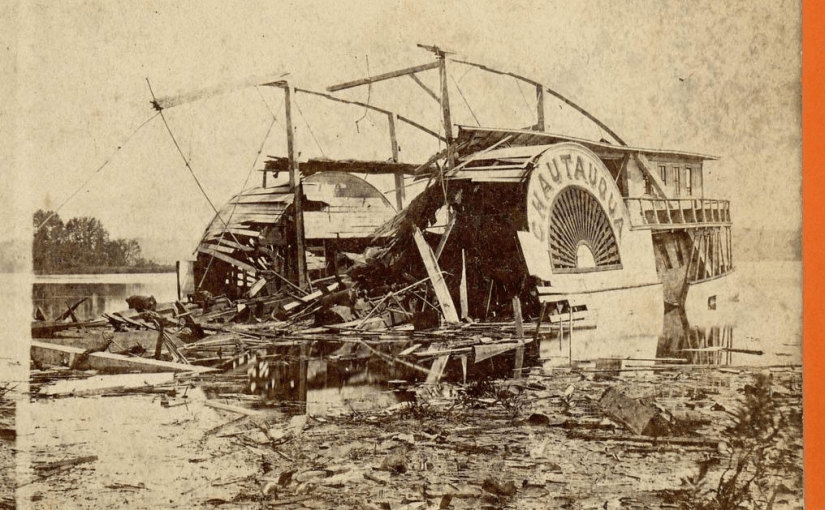
In a world where information is ubiquitous, literally at the tip of the finger in quantity, it’s amazing that the word Chautauqua doesn’t have an authentic, agreed-upon translation. An etymological search will tell you it has Haudenosaunee origins -Haudenosaunee being another name for the Iroquois nation- describing something “tied in the middle”, like a bag, or a pair of shoes by the laces, the general shape of Lake Chautauqua with its northern and southern basins separated by the narrows at Bemus Point and Stow. That crossing is measured in yards, while the widest places, both north and south are around two miles from shore to shore (the lake itself is about seventeen miles end to end). Chautauqua can also refer to everything from indigenous lands in Colorado, to a cultural and educational movement from the late 1800s. That’s a wide swath of interpretation for a single word.

     What’s known is that the Erie Indians who occupied our current borders, the original Chautauqua Lakers, were wiped out of existence (along with no fewer than eight other native tribes), by the French and the Iroquois Nation in the Beaver Wars, massacred or taken hostage by the martial factions. Before the people of Europe settled here, the bucolic landscape we know as Chautauqua County saw a fair share of carnage and bloodshed.

     The speed with which the Iroquois engulfed regional Indian communities meant that no one had time to do an extensive study of the Erie language, and their native tongue died with them. What’s left are loose translations adopted from leftover Iroquois dialect, hence the word Chautauqua has renditions sweeping from the above mentioned “bag tied in the middle” to the vastly different “place where fish are taken.”

Then there’s the romantic, tragic myth of the Erie Indian Princess.

Legend has it her name was Chautauqua. Chat was a French supplied nickname for the Erie people, meaning “cat”, and Taquan which means “spiritually aware and prone to self-sacrifice”. When her people chose to fight the Iroquois rather than surrender, fool’s errand for the agrarian, mostly peaceful Erie tribe, they were destroyed by the fierce and combinative nation, eradicated as a show of force to discourage other tribes from resisting.

Wikipedia says: The Iroquois League was known for adopting captives and refugees into their tribes. Any surviving Erie were absorbed by other Iroquoian tribes, particularly families of the Seneca, the westernmost of the Five Nations. Susquehannock families may also have adopted some Erie, as the tribes had shared the hunting grounds of the Allegheny Plateau and Amerindian paths that passed through the gaps of the Allegheny. The members of remnant tribes living among the Iroquois gradually assimilated to the majority cultures, losing their independent tribal identities.

The Erie Indian people simply went away, and with them any coherent, stipulatory meaning of the word Chautauqua.

The Erie Princess Chautauqua waded deeper into cool waters off Long Point. She looked back at the land she knew, her birthplace and home. She pictured the faces of her family, her father, mother, brave brothers, and sisters. All gone now. She knew they wouldn’t survive the slaughter. There was nothing left for her but to commit the ultimate act of Indian royalty, the last great measure. 

     As the Iroquois warriors (along with French and Haitian mercenaries) approached from land, she turned and walked into the depths of the lake. In an act of defiance and sacrifice she drown herself. And thereby christened the body of water Chautauqua.

Chautuaqua Lake Sailing Challenges

Printed in The Villager May 2024

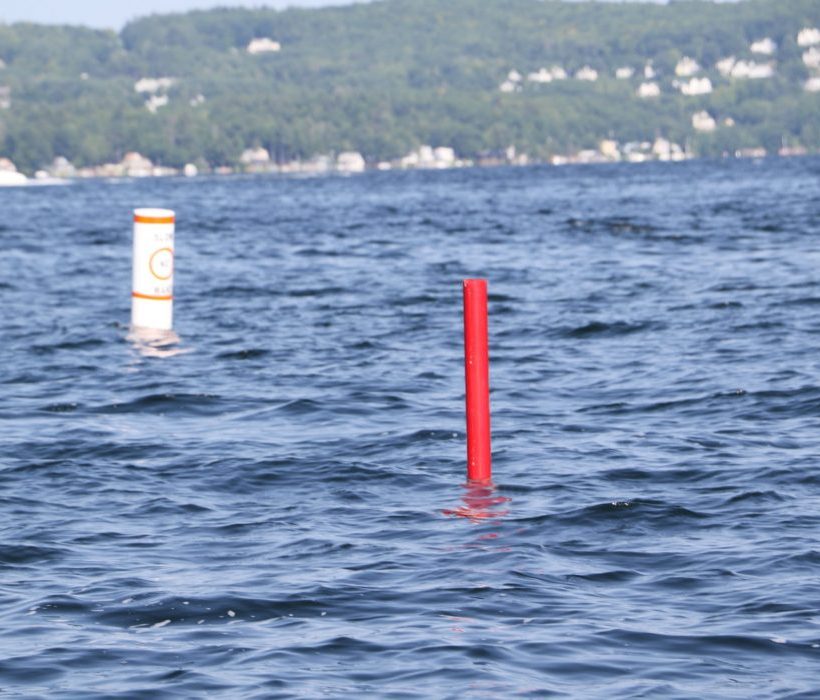
Were you passing on I-86 across the Chautauqua Memorial bridge last Monday morning, you would have been challenged to keep your vehicle between the narrow cement barriers that funnel traffic from the work being done on the overpass. In the water, the scene looked like the run-up to a catastrophe.

A large sailboat, named Trumpeter, sails stowed, steamed toward the center underpass, the highest point of passage under the bridge. The boat listed precariously to the starboard. If you weren’t familiar with the design of sailboats, their ability to heel at severe angles balancing tall masts with underwater keel and rudder, you’d be forgiven for believing you were about to witness the capsizing of the vessel.

But Trumpeter was under complete control by her captain, Greg Swan, principal owner of Ready About Sailing, the marina and boat sale business based in Celoron. She was tipped on her side intentionally, using 1,100 pounds of sandbags and four hearty shipmates to pass under the bridge whose clearance has now been reduced to 34’8” from its original 40’2”.

“Most of the twenty or so larger sailboats on Lake Chautauqua are stored at Ready About Sailing marina in Celoron during the winter,” Greg says. “In the Spring, we launch the boats, raise the masts, and then the boats are transported to the north basin where they are moored or docked for the summer. These sailors have always enjoyed free passage beneath the bridge.”

Deadheading sailboats from one basin of the lake to the other used to be a relatively easy process. Not anymore.

“The bottom line here is that the engineers that designed the bridge reconstruction project apparently failed to do their due diligence when deciding how the safety netting would be erected under the bridge to catch anything that might otherwise fall into the lake. They apparently did not consider sailboats during the design phase.”

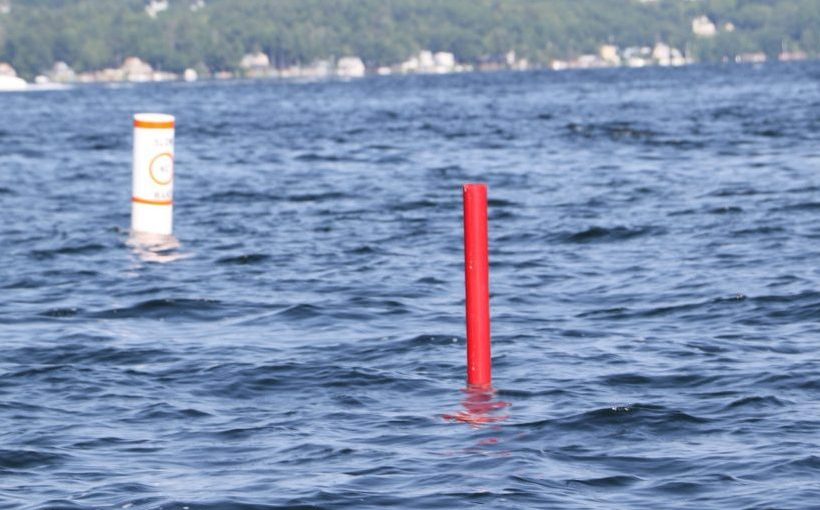
The safety netting has lowered the clearance under the bridge by nearly 5 ½ feet. A sailboat that once had six feet of room under the bridge at flood level, now has less than one. And it will take some brilliant and daring seamanship to get from one side to the other until that clearance is lifted, which, according to New York State, won’t happen until the bridge is completed, a two-to-three-year period if every single thing goes according to plan.

Greg says,” What we are left with is an obstruction to sailing the full length of the lake for the duration of the bridge project.”

In order to transport his larger sailboat, Greg had to be creative and rely on his considerable boating skills to get Trumpeter to the north basin mooring. This was with the lake about two feet below flood level. A higher lake level or more wave and wind action would make the maneuver nearly impossible. “You’ve essentially taken half the lake away for use from these size boats,” Greg says.

     There are twenty or so such sailing vessels he knows of that use the lake (well, now, half the lake). “The obstruction at the bridge has already caused multiple long-time Lake Chautauqua sailors to decide to sell their boats and give up the sport. This is tragic, especially since it could have been prevented if the right questions were asked to the right people before starting construction.”

The netting was a multi-million-dollar part of the overall bridge project, a necessary safety design to keep boaters safe from inevitable falling debris. Greg contacted the Department of Transportation in Buffalo to look for a solution. They were receptive, empathetic, but no help. “As the netting system was designed, there would be no way to remove the netting from even a single span to allow for sailboats to pass. And, the DOT has decided that it would be too expensive to retrofit.”

The NYS DOT was contacted for clarification. Here is the response from Susan Surdej, Assistant to Regional Director and Regional Public Information Officer for New York State Department of Transportation, Region 5:

The bridges carrying Interstate 86 over Chautauqua Lake are 100 percent safe for motorists.  Out of an abundance of caution, the Department is re-evaluating plans for the safest, most efficient removal of concrete from the bridges carrying Interstate 86 over Chautauqua Lake. Occasional overnight closures are expected with a project of this size, but there are currently no plans for long-term closures. NYSDOT will keep the public apprised on any changes in the construction schedule once the evaluation is complete. 

There was no response addressing the sailboat issue.

Ellicottville, N.Y; An Abolitionist Story

In 1836, the formation of the Cattaraugus County Anti-Slavery Society in Ellicottville marked a bold stand against slavery, reflecting growing abolitionist sentiment in rural western New York.

Ellicottville circa 1879

In 1836 Ellicottville was as a bona fide town in the state of New York, and recognized as the county seat of Cattaraugus County. It has a population of approximately 635 people, pioneers who carved the small burgh out of the wilderness, buying up acreage from the infamous Holland Land Company starting in 1815. The citizens are industrious and self-sufficient. The town boasts a hotel, a school, a church and a tannery. By the 1870s, Ellicottville will have everything a thriving community needs including stores, banks, and professionals like doctors and lawyers.

The citizens are also socially broadminded with foresight and a progressive resolve that makes them distinctive for such a small community. In 1835 the community opened The Ellicottville Female Seminary, one of the first religious schools for women in the United States, a radical cause célèbres that marked Ellicottville as a pocket of liberal activism in southwestern New York.

The Ellicottville School

In the Spring of 1836, a small group of Ellicottville citizens met in the refectory of St. John’s Episcopal Church on the public square. St. John’s was the first Episcopal in Cattaraugus County, a sterling example of early Gothic Revival Church Architecture, uncommon in this region.

     They arrived to hear a lecture from abolitionist speaker Huntington Lyman. He was there on behalf of northern abolitionists, specifically American Anti-Slavery Society, to speak about the evils of slavery. The meeting wasn’t without controversy. Lyman’s talks stirred strong emotions within the burgeoning community.

Lyman studied at Lane Seminary, where he joined the Lane Rebels, a group of students who left the seminary in protest after being banned from discussing slavery. He graduated from Oberlin Seminary in 1836, a hub for progressive thought and abolitionist activism. From there he began his lecture tour, stopping in Ellicottville in April of that year.

Huntington Lyman

Abolitionist sentiment was growing in the North. Organizations like the American Anti-Slavery Society, founded in 1833, were distributing pamphlets, organizing lectures, and flooding Congress with petitions demanding the end of slavery. This was met with fierce resistance from pro-slavery politicians and citizens, especially in the South. This was, after all, the precursor to the bloody Civil War. Slavery was obviously deeply entrenched in the southern United States, and even though it wasn’t a known practice in Ellicottville, it was still legal. At the 1836 meetings some Ellicottville residents supported Lyman, others viewed his presence with trepidation and skepticism, as a threat to public peace. Local debate was intense. The Ellicottville Republican called his lectures “exciting and dangerous,” but Lyman himself was described as a “disturber of the peace”.

     More meetings, more lectures were scheduled, and Lyman persisted. After a few weeks of attracting only a handful of people, a larger gathering was held at the local schoolhouse on April 23, 1836. It was at this assembly, amid heated discussion and public tension, that the Cattaraugus County Anti-Slavery Society was officially formed.

     The impetus and mission of Society was not only to broadcast a very public ethical stance on the practice of slavery, but to communicate and coordinate with the Underground Railroad that passed through the Buffalo-Niagara region.

It is a credible achievement that the people of Ellicottville had the moral capacity to embrace the anti-slavery movement even in small towns far from the political spotlight in big cities like Philadelphia and Chicago. The residents felt compelled to take a moral stand. Their actions reflected a growing awareness that slavery was not just a Southern issue, it was a national one, and silence was complicity.

This article and others can be found published in The Villager Magazine at https://thevillagerny.com/